Learning from Vienna
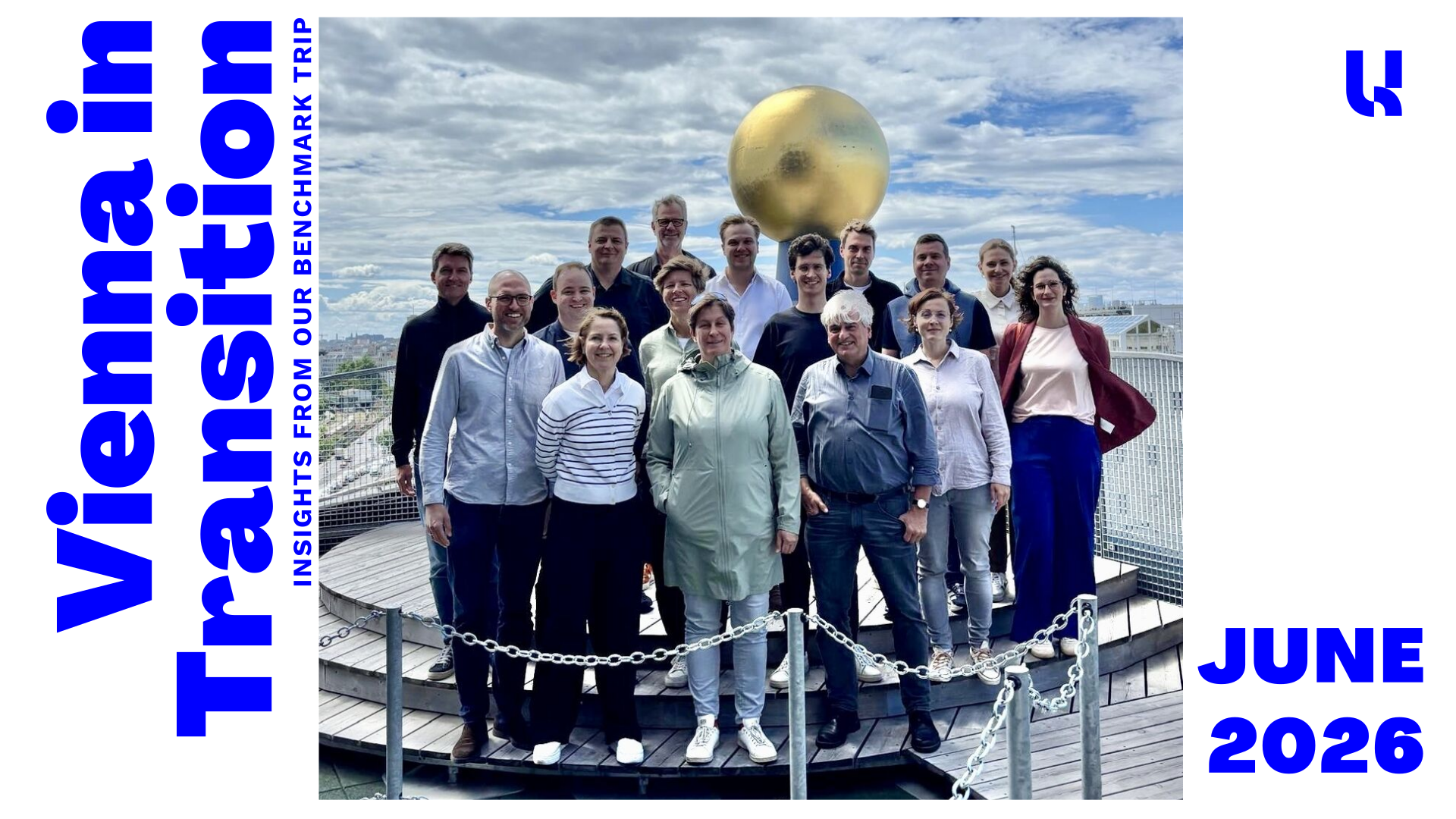
What framework conditions are needed for transformation to succeed? Three days, numerous discussions and many new perspectives: as part of our 2026 benchmarking trip, we explored – together with representatives from businesses, start-ups and the public sector – how Vienna is driving change in the fields of energy, mobility and urban development.
On site in Vienna
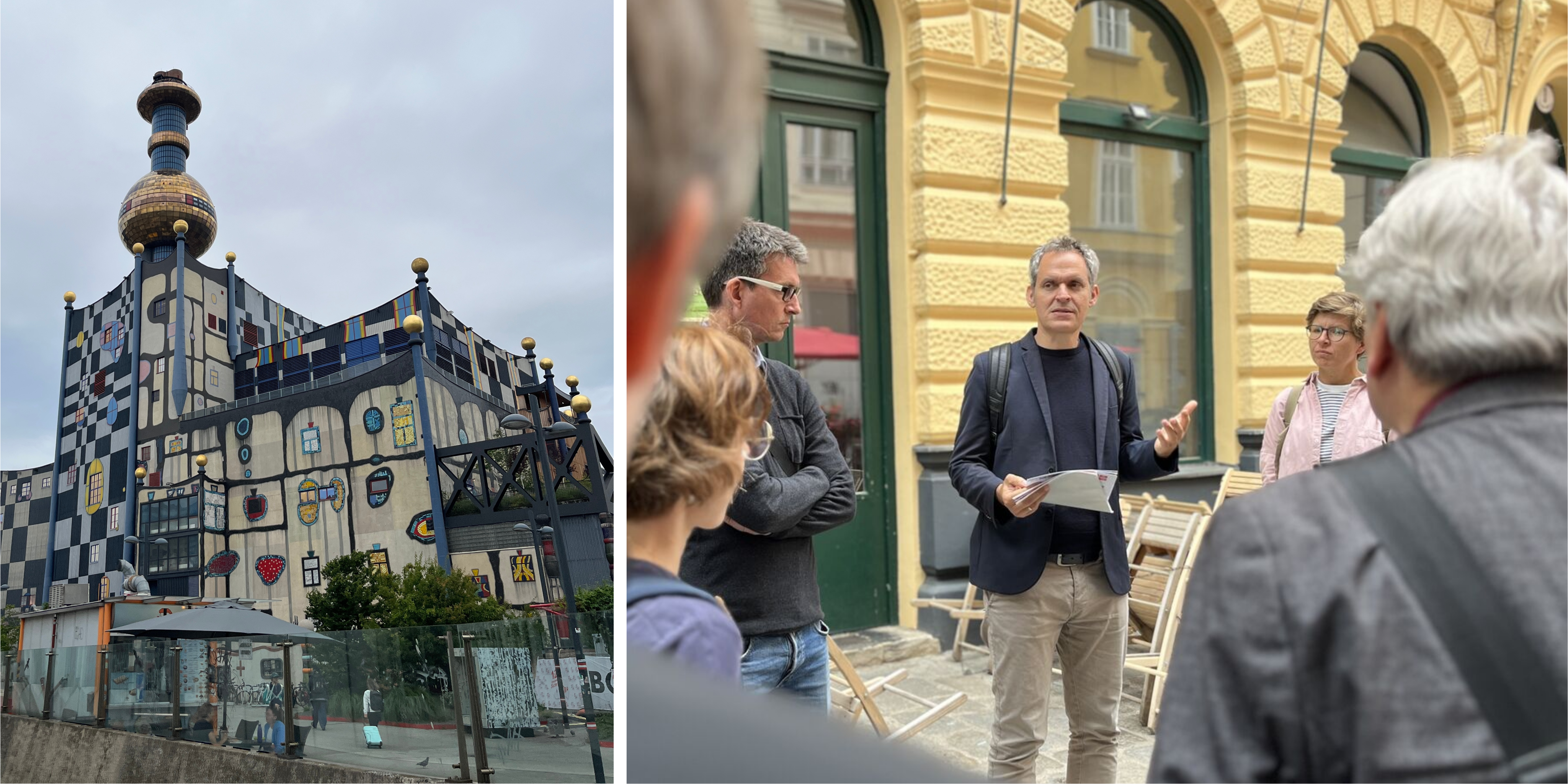
Our stops took us from the Federal Chancellery, via the Austrian Energy Agency and the City of Vienna, to Wien Energie, the Climate Lab and a networking evening with start-ups such as POINT&, vionmo and NECTURE at the ÖBB Open Innovation Factory. A city walk, a visit to the newly opened Supergrätzl in Favoriten and a guided tour of the Spittelau waste-to-energy plant brought many of the strategies discussed to life.
What we take home
Climate neutrality as a guiding framework
A key lesson from the trip: in Vienna, energy, mobility and urban development are not viewed in isolation. The goal of climate neutrality by 2040 provides a common framework for policy, administration and public enterprises, thereby guiding long-term decisions and investments in equal measure. It was particularly striking how consistently all those we spoke to aligned their measures with this overarching goal.
Equally striking was the pragmatic approach to innovation. Projects are piloted, evaluated and further developed. Progress takes precedence over perfection, true to the motto
"80% are better than 120%"
At the same time, it became clear that scaling up successful pilot projects remains a challenge in Vienna too.
Rethinking mobility and urban development
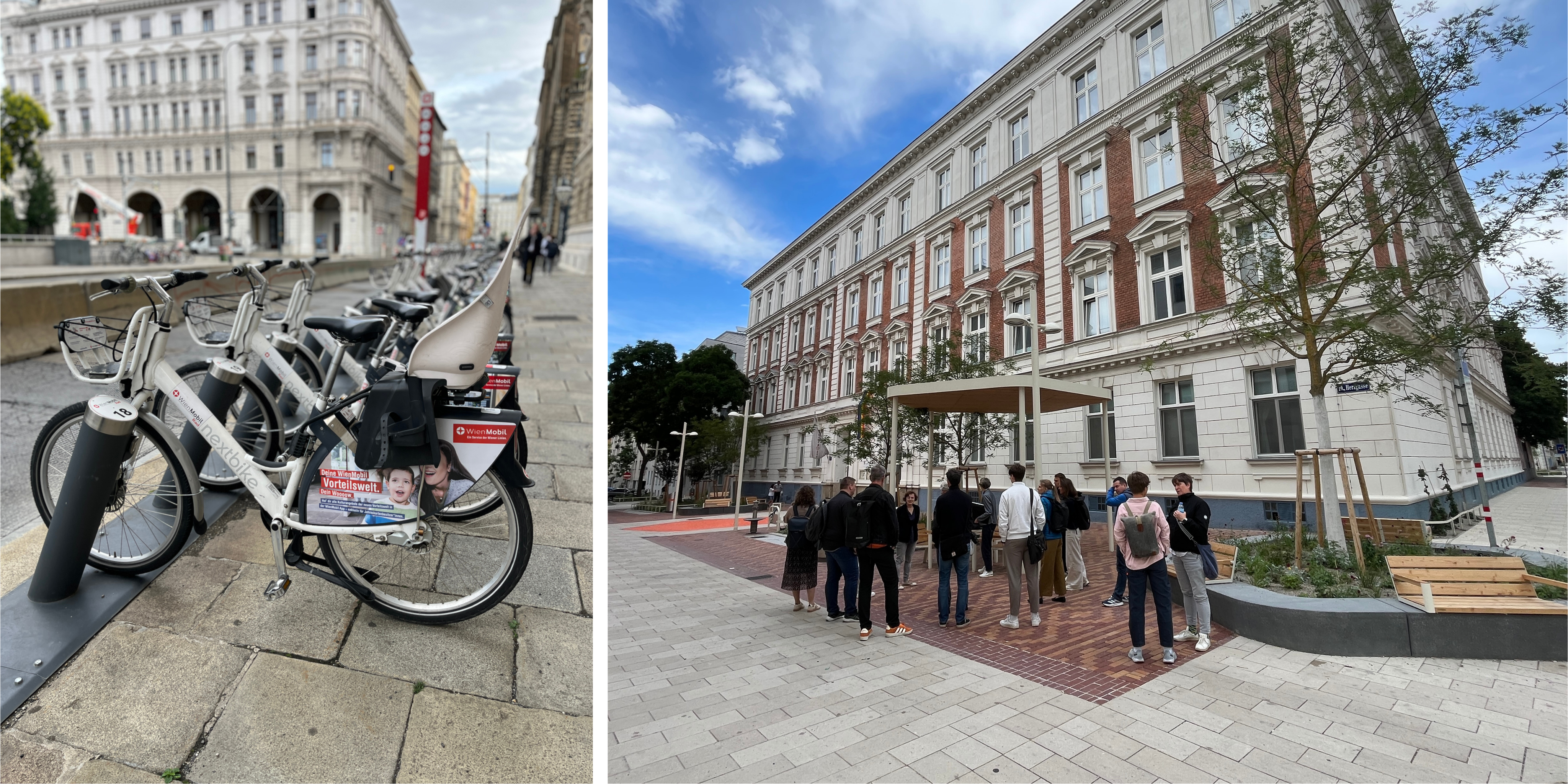
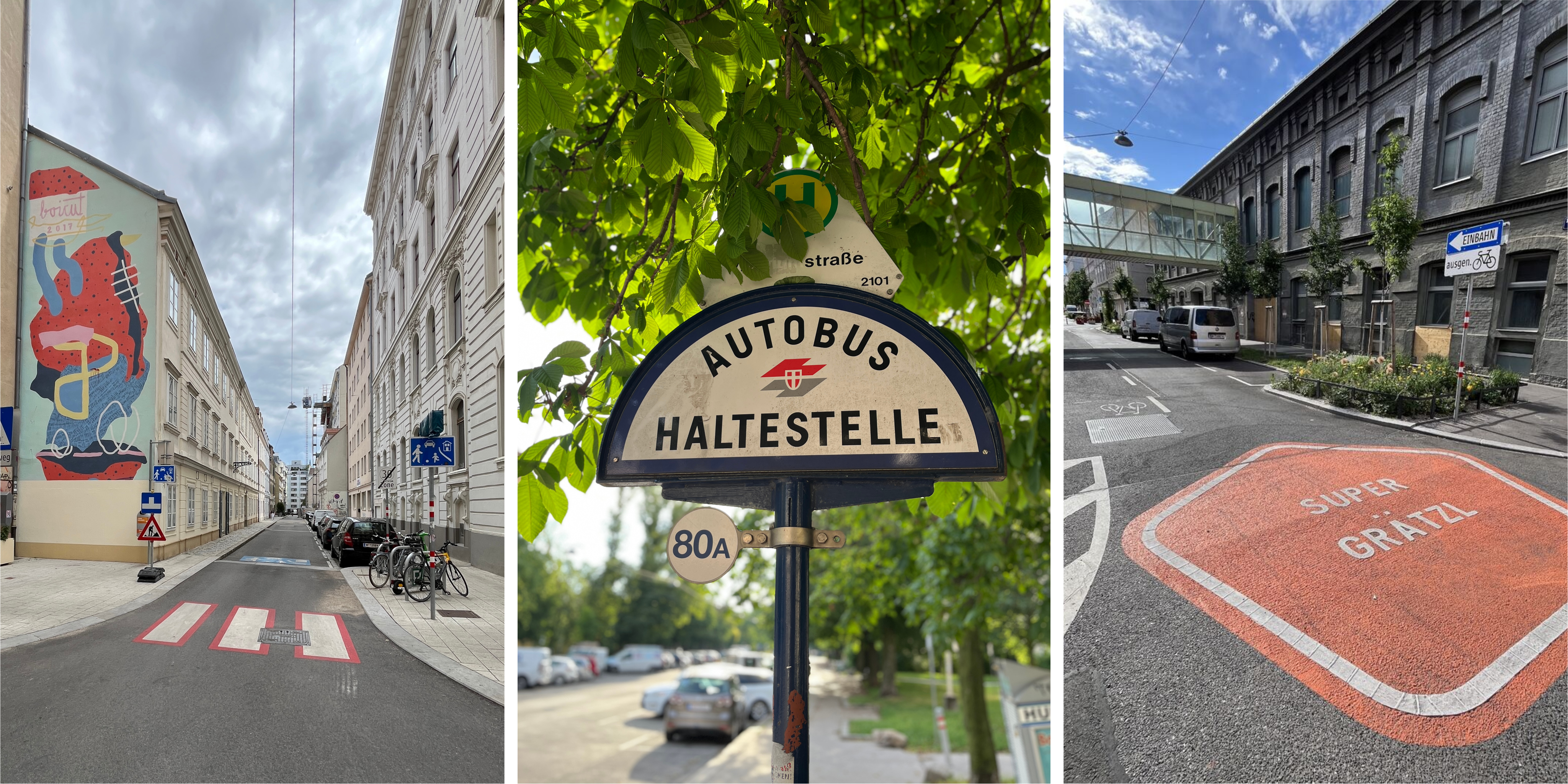
A visit to Vienna’s first “Supergrätzl” – a charming Viennese play on the concept of Barcelona’s superblocks – made it clear how this approach is reflected in the urban landscape. Traffic calming measures, greening initiatives and new public spaces all share a common goal: to improve the quality of life in public spaces. The results are plain to see: over 60 new trees, 94 new green spaces and significantly less through traffic. Measures such as parking management and the expansion of eco-friendly transport are not viewed in isolation, but are understood as part of an integrated approach to urban development.
At the same time, it must not be forgotten that this approach requires long-term resources and sustained investment in green spaces and open spaces, as well as their maintenance.
The energy transition needs more than just green electricity
Whilst Austria is already well advanced in terms of electricity generation, with around 85 per cent coming from renewable sources, the greatest challenges remain in decarbonising heating and transport. The share of electricity in final energy consumption is therefore set to rise from 21 per cent (2023) to 48 per cent by 2040. Accordingly, district heating, electrification and energy sharing were the focus of our discussions with the Austrian Energy Agency, Wien Energie and the Climate Lab.
The discussion on energy communities was particularly fascinating: these are networks of households, businesses and local authorities that jointly use and share locally generated electricity. This is made possible by an advanced smart meter infrastructure and targeted support schemes. This is an area in which Austria is significantly ahead of Germany in regulatory terms and is providing valuable impetus.
Conclusion
Vienna does not provide a blueprint that can be replicated exactly. However, the trip has impressively demonstrated how important a shared vision, integrated organisational structures and, above all, the courage to implement changes are for a successful transformation. This is precisely where the added value of our benchmarking trip lies: in understanding successful approaches, assessing them critically and discussing how they can be adapted to our own context.